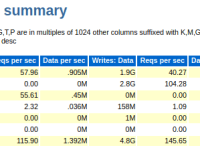
Estimating I/O Efficiency with Little’s Law Using Oracle AWR Report
In queueing theory, there is a fundamental theorem known as Little’s law, authored by John Little. As documented on Wikipedia, the law states that the long-term average number of customers (L) in a stationary system is equal to the long-term average effective arrival rate (λ) multiplied by the average time  that a customer spends…

Does Your Storage Respond Fast Enough?
The response time of the storage subsystem is critical to overall Oracle database performance. Assessing storage responsiveness can be challenging for DBAs who lack direct access to the Operating System and cannot utilize traditional tools like iostat or sar. Oracle provides a critical metric for this purpose: Average Synchronous Single-Block Read Latency. This metric, found…
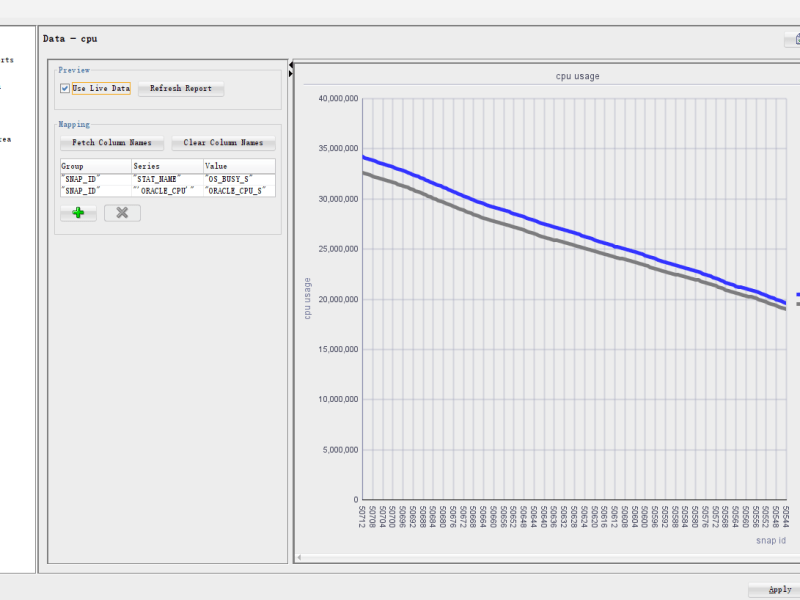
Detecting CPU-Noisy Neighbors in Oracle
In Oracle environments, CPU-noisy neighbors are non-Oracle processes that consume significant CPU resources and reduce the CPU available to the database. CPU-noisy neighbors can be detect by comparing total OS CPU usage with Oracle CPU usage. If the gap between is huge, it strongly suggests the presence of a CPU-noisy neighbors. Oracle CPU usage can…
Step-by-Step: Installing Oracle 26ai RAC Database on Linux Using VMware
Conceptual Architecture A conceptual architecture diagram of Oracle RAC is as follows: The biggest obstacles to building a private RAC test environments is the requirement for shared storage. Traditionally, this necessitates expensive SAN hardware.However, by leveraging VMware ESXi’s advanced disk attributes, specifically the multi-writer flag, we can simulate a professional storage environment. This “poor man’s…
Step-by-Step: Installing Oracle 26ai via RPM and Creating Databases
Installing Oracle Database on Linux using RPM packages significantly reduces deployment complexity. Many intricate configuration steps are handled automatically during the package installation. This article demonstrates the process of installing Oracle 26ai using the RPM method on RHEL 9. 1. Linux Operating System Preparation To resolve dependency issues on RHEL, we utilize the free Oracle…
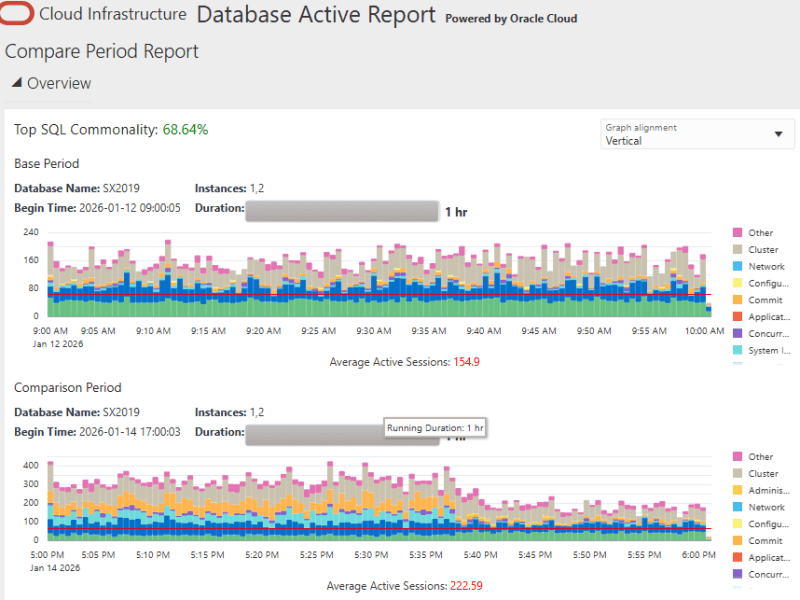
Why Incremental Backups Can Be Deadlier Than Full Backups
A common assumption in Oracle database administration is that incremental backups are inherently lighter than full backups. However, a recent real-wold case revealed a counterintuitive result.

Troubleshooting ORA-01152: When Datafiles are “From the Future”
The ORA-01152 error is a common headache for DBAs, particularly after a database restore operation or when recovering from a backup control file. It essentially tells you that your database files are “newer” than your control file expects. Below is a guide on how to diagnose the issue and resolve it when you don’t have…

Evaluating Storage Performance by AWR Snapshot Raw Data
As a DBA, having a clear understanding of your storage performance is essential to correctly judge overall database behavior. However, in many enterprises, DBAs do not have OS-level access, so they cannot use tools like iostat or sar. Fortunately, Oracle’s AWR Snapshot Raw Data retains historical I/O performance metrics that can help fill this gap.…

Oracle AWR Case Study: Diagnosing ‘enq: TX – row lock contention’
In a busy and healthy database environment, it is unavoidable that multiple sessions will attempt to modify the same row or set of rows simultaneously. This leads to situations where one session must wait for another to finish before proceeding, resulting in the “enq: TX – row lock contention” wait event. While some level of…

Oracle AWR Case Study: Pinpointing When the Execution Plan Flip Occurred
One day, users angrily complained that the Oracle database had suddenly become unbearably slow. They could feel the lag but had no idea when the slowdown actually started. The Standout Troublemaker Below is the “SQL Statistics” section from the latest AWR report: The top SQL consumed more than 99% of Total DB Time. It executed…
Something went wrong. Please refresh the page and/or try again.
Follow My Blog
Get new content delivered directly to your inbox.


 Yuan Yao, An Oracle ACE's Blog