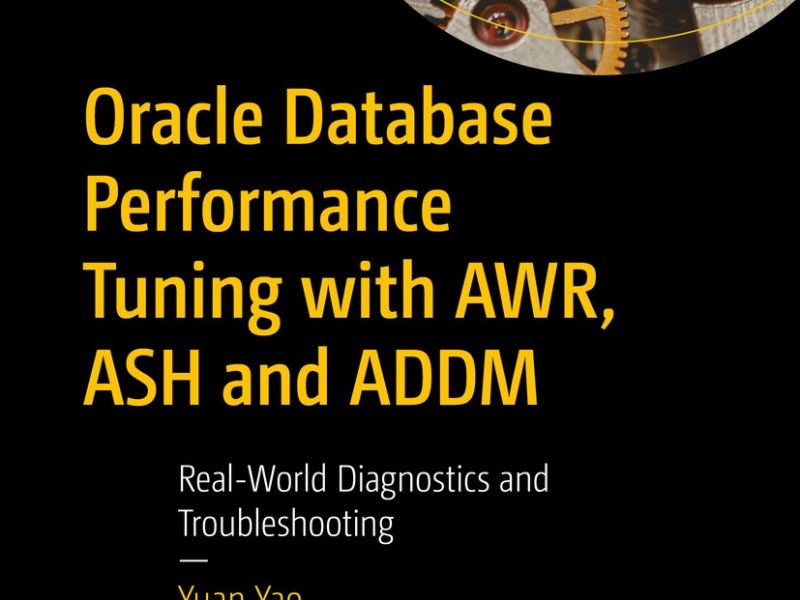
“Assessing Overall I/O Latency with Little’s Law” from My Book: Oracle Database PerformanceTuning with AWR, ASH, and ADDM
To give readers a taste of my book, Oracle Database Performance Tuning with AWR, ASH, and ADDM, I as sharing the section “Assessing Overall I/O Latency with Little’s Law” below. Little’s Law is a fundamental relationship in queueing theory: 

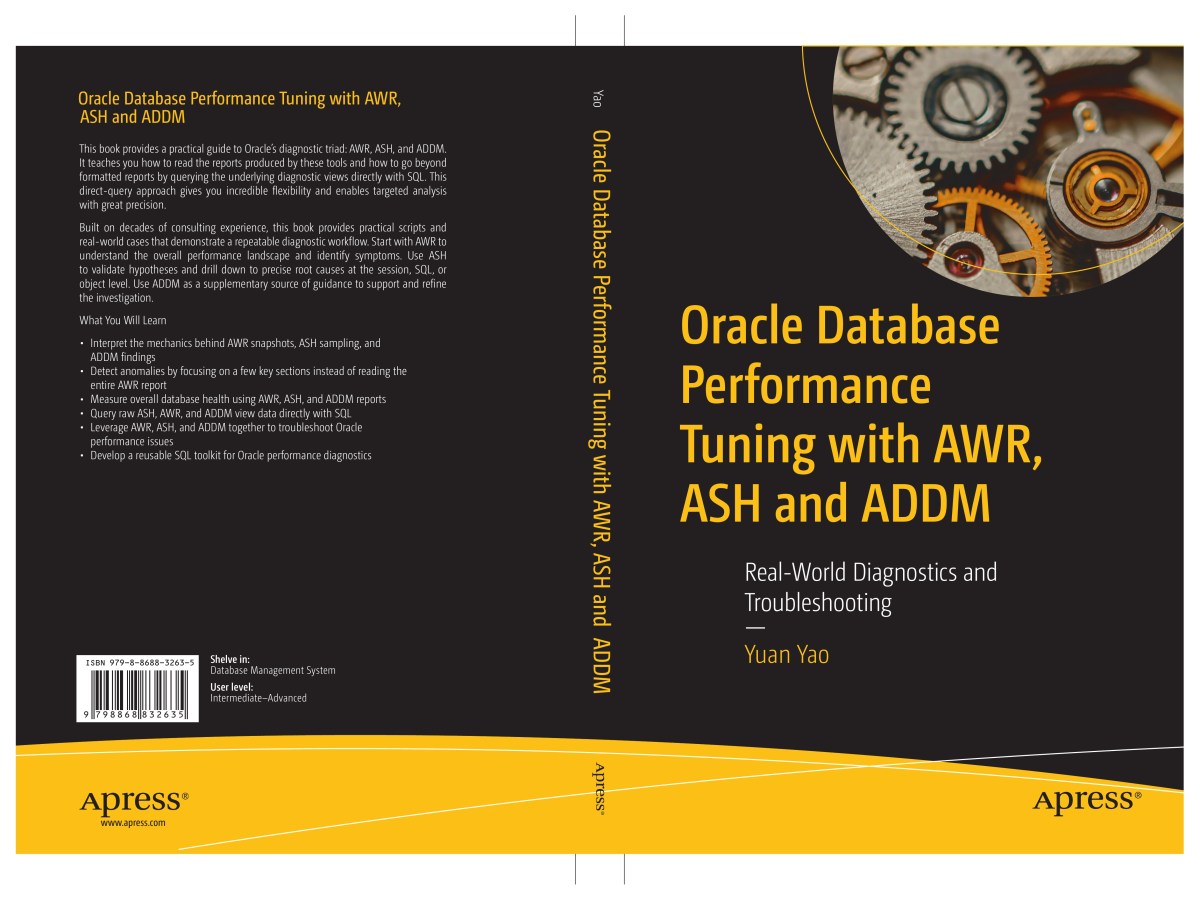
Table of Contents–Preview My Book: Oracle Database Performance Tuning with AWR, ASH, and ADDM
I am delighted to share that my new Oracle book, Oracle Database Performance Tuning with AWR, ASH and ADDM, will be published by Apress. For readers interested in the book, I will share a series of previews here. This second post covers the section “Table of Contents“ Table of Contents Front Matter PART I: ASH…
How This Book Is Structured–Preview My Book: Oracle Database Performance Tuning with AWR, ASH, and ADDM
I am delighted to share that my new Oracle book, Oracle Database Performance Tuning with AWR, ASH and ADDM, will be published by Apress.For readers interested in the book, I will share a series of previews here. This second post covers the section “How This Book Is Structured.” How This Book Is Structured This book…
Why I Write This Book–Preview My Book: Oracle Database Performance Tuning with AWR, ASH and ADDM
I am delighted to share that my new Oracle book, Oracle Database Performance Tuning with AWR, ASH and ADDM, will be published by Apress. For readers interested in the book, I will share a series of previews here. This first post covers the section “Why I Write This Book.” Why I Write This Book An…
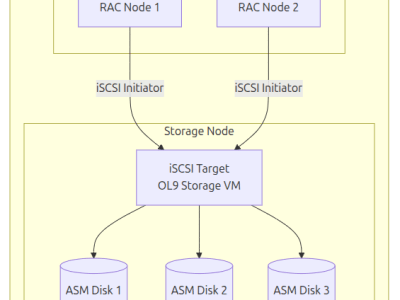
The “Poor Man’s” Oracle 26ai RAC on Proxmox
In production, building an Oracle RAC meant investing in an expensive Fibre Channel or iSCSI SAN (Storage Area Network) with dedicated physical hardware—costing thousands of dollars. For years, the “poor man’s” RAC was to use VMware with the multi-writer flag, Since VMware vSphere/ESXi is no longer truly free (the free version has limited features now),…
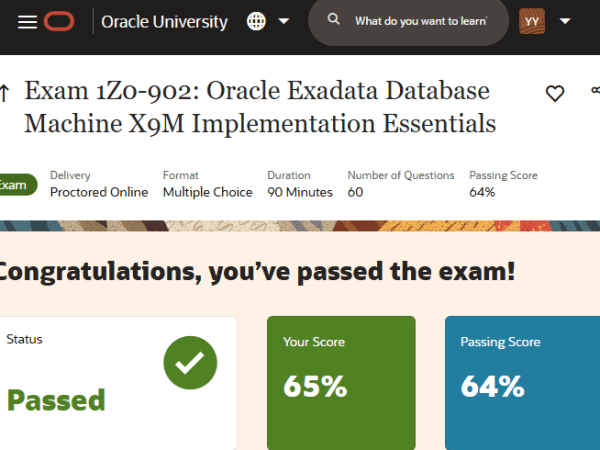
Scraped Through the Oracle Exadata X9M Implementation Specialist Exam (1Z0-902)
This week, I tackled the Oracle Exadata Database Machine X9M Implementation Essentials (1Z0-902) exam. With the passing score set at 64%, I emerged with a 65%. Some might call it a close shave; I console myself by calling it a perfectly calibrated effort for one of the most demanding certifications in the Oracle ecosystem. The…
Estimating I/O Efficiency with Little’s Law Using Oracle AWR Report
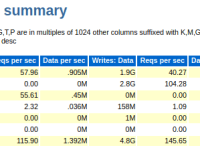
In queueing theory, there is a fundamental theorem known as Little’s law, authored by John Little. As documented on Wikipedia, the law states that the long-term average number of customers (L) in a stationary system is equal to the long-term average effective arrival rate (λ) multiplied by the average time  that a customer spends…

Does Your Storage Respond Fast Enough?
The response time of the storage subsystem is critical to overall Oracle database performance. Assessing storage responsiveness can be challenging for DBAs who lack direct access to the Operating System and cannot utilize traditional tools like iostat or sar. Oracle provides a critical metric for this purpose: Average Synchronous Single-Block Read Latency. This metric, found…
Detecting CPU-Noisy Neighbors in Oracle
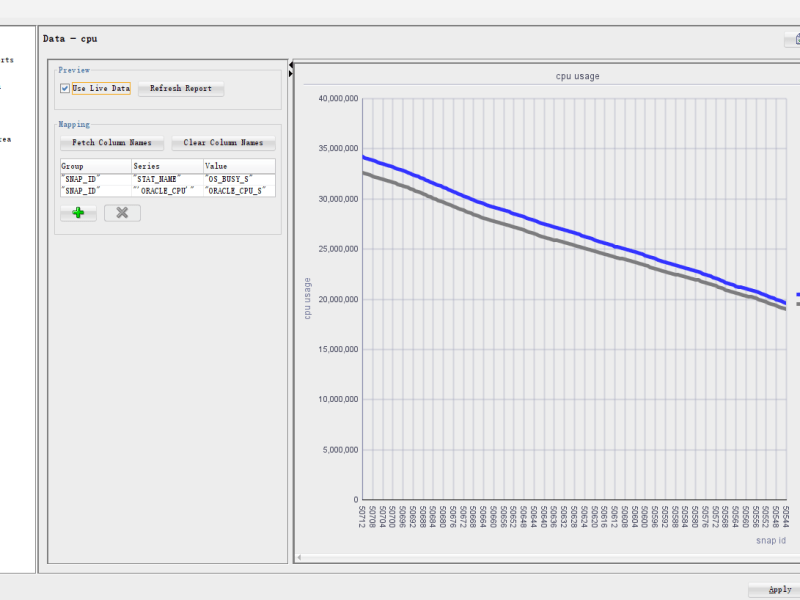
In Oracle environments, CPU-noisy neighbors are non-Oracle processes that consume significant CPU resources and reduce the CPU available to the database. CPU-noisy neighbors can be detect by comparing total OS CPU usage with Oracle CPU usage. If the gap between is huge, it strongly suggests the presence of a CPU-noisy neighbors. Oracle CPU usage can…


